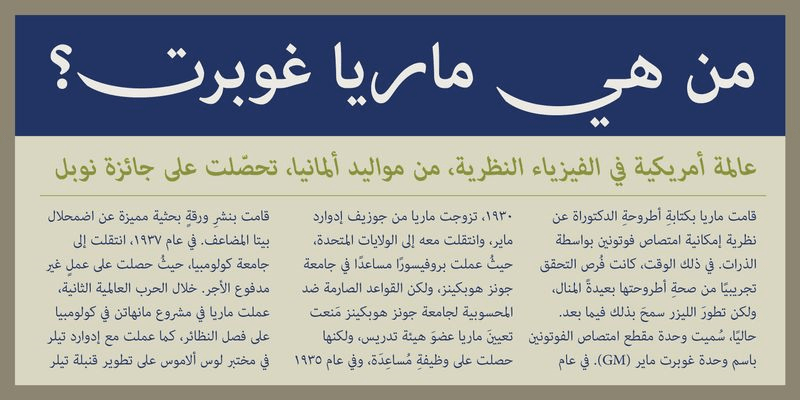
The Adobe Arabic Font Family, designed by Robert Slimbach and Tim Holloway for Adobe Originals, is a versatile typeface that strikes a perfect balance between the rich tradition of Arabic script and the needs of modern digital typography. Designed with both cultural sensitivity and practical functionality in mind, Adobe Arabic allows for smooth integration of Arabic typography into contemporary design projects, particularly those in the digital realm.
Released as part of Adobe’s extensive type library, Adobe Arabic is widely appreciated for its legibility, elegance, and the care with which it bridges historical Arabic calligraphic styles with the demands of today’s typographic and design landscapes.
The Vision Behind Adobe Arabic
The development of the Adobe Arabic Font Family was driven by the need for a high-quality Arabic typeface that would serve both print and digital media while honoring the aesthetic and functional requirements of Arabic script. Robert Slimbach, an expert type designer known for his work on Latin-based fonts, collaborated with Tim Holloway, an Arabic script specialist, to create a typeface that could meet the challenges of Arabic typography in modern contexts.
The goal of Adobe Arabic was twofold: to create a typeface that stays true to the rich history of Arabic calligraphy and script traditions, while also providing modern designers with a tool that is versatile enough to handle everything from long-form text to headlines. Slimbach and Holloway meticulously studied historical Arabic scripts, particularly the Naskh style, known for its clarity and fluidity, and adapted these forms to fit the needs of contemporary typographic practices.
The Design Approach: Melding Tradition and Functionality
Arabic typography is notably different from Latin typography, not only in its letterforms but also in how the script behaves. Arabic letters change shape depending on their position within a word—whether at the beginning, middle, or end—and this poses unique challenges for digital type design. Slimbach and Holloway addressed these challenges by creating a typeface that would not only retain the fluidity and elegance of Arabic calligraphy but also function smoothly across a wide range of digital platforms.
Some of the design highlights of Adobe Arabic include:
- Naskh-Inspired Letterforms: The foundation of Adobe Arabic lies in the Naskh script, one of the most widely used and legible forms of Arabic calligraphy. Naskh is known for its clarity and readability, making it an ideal basis for a modern typeface intended for both body text and display use. Adobe Arabic successfully replicates the flowing, connected letterforms of Naskh while ensuring that the typeface remains legible at both small and large sizes.
- Proportional Balance: Slimbach and Holloway designed Adobe Arabic to maintain an optimal balance between tradition and modernity. The proportions of the letters are carefully calibrated to ensure that they fit comfortably within a modern page layout, particularly when paired with Latin text in multilingual projects. The typeface’s proportions make it particularly suitable for long-form text, while its graceful curves ensure a harmonious look when used for headlines or short phrases.
- Clear, Readable Design: Adobe Arabic was designed with legibility as a top priority. The fluid connections between letters, a hallmark of Arabic script, are maintained without sacrificing clarity. The clear design of the letters helps readers easily distinguish between characters even in smaller point sizes, making the font suitable for both print and on-screen use.
- Contemporary Aesthetic: Despite its foundation in traditional Naskh calligraphy, Adobe Arabic has a contemporary feel that makes it highly adaptable for modern design projects. Its simplicity and refinement allow it to be used in a variety of contexts, from editorial design to advertising, websites, and digital applications. This versatility is what makes Adobe Arabic a popular choice among designers who need a functional yet elegant Arabic typeface.
Multilingual Harmony: Pairing Adobe Arabic with Latin Text
One of the standout features of the Adobe Arabic Font Family is its ability to pair seamlessly with Latin-based typefaces. Slimbach, known for designing many of Adobe’s most successful Latin fonts, ensured that Adobe Arabic would work in harmony with Latin fonts, creating a unified design language for multilingual projects. This feature is especially valuable in global contexts where Arabic and Latin scripts are used side by side, such as in international publications, corporate communications, and websites.
Adobe Arabic’s ability to complement Latin fonts without clashing in style or proportion makes it an excellent choice for bilingual or multilingual layouts. It maintains visual consistency while preserving the distinctive qualities of Arabic script, ensuring that both scripts can coexist on the same page without detracting from each other.
Applications of Adobe Arabic Font Family
The Adobe Arabic Font Family is designed to be versatile, making it suitable for a wide range of applications in both print and digital formats. Below are some of the primary areas where Adobe Arabic excels:
- Editorial Design and Publishing: One of the primary applications for Adobe Arabic is in editorial design, particularly for books, magazines, newspapers, and other long-form publications that require clear, readable text. Its legibility at smaller sizes makes it ideal for body text, while its refined letterforms allow for elegant headlines and titles. Adobe Arabic has been used extensively in publications that feature both Arabic and Latin scripts, helping create visually cohesive multilingual layouts.
- Web Design and Digital Media: In today’s digital world, the need for fonts that perform well on screens is critical. Adobe Arabic was designed with digital use in mind, ensuring that the typeface remains legible and beautiful across various screen resolutions and devices. Its proportions and clarity make it an excellent choice for websites, apps, and digital publications where readability and aesthetics are essential.
- Branding and Corporate Communications: For companies operating in both Arabic and non-Arabic-speaking markets, Adobe Arabic provides a solution for maintaining brand consistency across languages. The font’s modern yet traditional look makes it suitable for corporate branding, advertising, and promotional materials where the use of both Arabic and Latin scripts is necessary. Its clean, professional appearance helps brands convey trustworthiness and modernity while respecting the cultural significance of Arabic script.
- Signage and Wayfinding: Due to its clear and readable design, Adobe Arabic is well-suited for signage and wayfinding systems, particularly in multilingual environments. Airports, shopping centers, museums, and other public spaces that require Arabic and Latin text to coexist benefit from Adobe Arabic’s clarity and visual harmony. The font ensures that signs are easy to read from a distance, even in complex settings.
- Government and Legal Documents: In contexts where formal, legible typography is essential, such as in government or legal documents, Adobe Arabic shines. Its clarity and balance make it ideal for official papers that require both Arabic and Latin scripts to appear side by side, ensuring that the content remains accessible and easy to understand.
The Significance of Adobe Arabic
Adobe Arabic is significant not only because of its design but also because of its role in bridging the gap between traditional Arabic calligraphy and the needs of modern digital typography. Arabic typography poses unique challenges, and the development of high-quality, functional Arabic fonts has lagged behind Latin typography for many years. However, typefaces like Adobe Arabic represent a major step forward, providing designers and typographers with the tools they need to integrate Arabic text into modern layouts without sacrificing aesthetic quality or readability.
The collaborative effort between Robert Slimbach and Tim Holloway ensures that Adobe Arabic is deeply rooted in the tradition of Arabic calligraphy while being tailored for contemporary use. Their expertise in both Latin and Arabic typography has resulted in a typeface that meets the demands of a global, multilingual audience.
Conclusion
The Adobe Arabic Font Family, designed by Robert Slimbach and Tim Holloway, is a landmark in modern Arabic typography. It successfully blends the fluid, elegant letterforms of traditional Arabic script with the functionality and flexibility required for contemporary design. Whether used in print, digital media, or corporate branding, Adobe Arabic stands out for its legibility, balance, and adaptability. Its ability to pair seamlessly with Latin fonts makes it an invaluable tool for designers working on multilingual projects, while its refined design ensures that it remains a popular choice for both formal and modern applications.
By honoring the history of Arabic calligraphy while embracing the technological advancements of digital typography, Adobe Arabic demonstrates that tradition and modernity can coexist beautifully in the world of type design.

 Font Foundry Hub